Showing posts with label Access. Show all posts

Saturday, September 29, 2012

Disability Legislation - Must we wait for a Law to tell us to treat all patients?

There is a higher court than courts of justice and that is the court of conscience
Mahatma Gandhi


The Story so far...
In 2008 the United Nations Charter on the Rights of People with Disabilities came into being.The convention was an attempt to break from the traditional mold of viewing people with disability as instruments of charity and ensuring that people with Disabilities enjoy the same freedoms and human rights as all individuals. The charter. The fact that 88 nations ratified the the convention on the opening day made this the fastest human rights convention to be adopted by the UN.
One can argue that the convention by itself is nothing new. It merely ratifies what should be evident to any decent human being - that disabled people enjoy the same rights as others. Countries that ratified the convention (including India) are obligated to enact legislation to enforce the articles of the convention.
In 2012 the Government of India passed The Rights of Persons with Disabilities Bill which is designed to do just that. The bill is made up of six parts Part I contains the rights and entitlements; Part II provides for powers, duties and responsibilities; Part III elaborates on regulatory and monitoring authorities; Part IV addresses grievance redressal; Part V deals with offences and penalties; and Part VI is miscellaneous segment which is followed by a schedule on the named list of disabilities which accompanies the generic definition.

Does this change anything?
The bill moves on from the existing people with disability (PWD) act of 1995 to include more "generic definitions" of disabilities. Thallasemia, Heamophila and Dwarfism; not included in the original act find mention in the new bill. But is this really the approach we want to take. Far from following the stated aim of the convention the bill seems to want to create newer "definitions". Furthermore, while the fifth part of the bill states out that discrimination of a person with disability (including by a health care professional who refuses to render care) is punishable by a fine or imprisonment or both, it is hard to see how this law can be enforced.
It is the duty of every health care professional to tend to someone in need. This said very often the reason that a person with disabilities is denied health care has very little to do with the attitude of the health-care provider. The bill states that discrimination on the part of a health care provider would be punishable. How can this be enforced when the system doesn't allow for punishment of the road services that do not allow a person with disability to reach a bus stop much less travel by a bus. Similarly the law states that an individual with disability has the same rights as individuals without. Does that mean that in areas where there is no medical facility for the general population then somehow the absence of health care to an individual with disability is acceptable. Lastly the creation of generic definitions makes the whole bill seem like an exercise in futility. Is a child with a congenital heart defect supposed to be considered perfectly "normal" because unlike heamophila and thallasemia it is not listed among the "Generic Definitions". Is it acceptable to deny health care to a "normal" child but acceptable to punish the denial of the same to a child with disability.
As dentists we have an obligation to render the best possible care to each of our patients.  The list of plausible excuses to deny care to a person with special needs is a long and convincing one. "I am not competent enough to do so"; "the patient would be better off with a specialist", "I lack the necessary equipment to render effective care"... each of these arguments are effective, convincing and in many cases also true. I am quite certain that no legislation can prosecute a doctor who offers any one of these reasons. While the legal right to universal health care may be a great concept; the only way to enforce it is to see it as   a moral obligation.

Wednesday, January 21, 2009

Transferring a Patient from the Wheelchair to the Dental Chair

Transfer of the patient from the wheelchair can be a scary experience for both the patient and the inexperienced dentist. Factors that will determine the actual success of the transfer include

  • ·         Whether the patient is able to transfer himself or requires assistance
  • ·         The Ability of the care giver to give help
  • ·         The skill and experience of the dental staff

Keeping in mind the above mentioned parameters the National Institute of Dental and Craniofacial Research (NIDCR) has proposed the following six steps to a safe wheelchair transfer

STEP 1: Determine the patient's needs

 Ask the patient or caregiver about

a)      preferred transfer method

b)      patient's ability to help

c)       use of special padding or a device for collecting urine

d)      probability of spasms

Reduce the patient's anxiety by announcing each step of the transfer before it begins.

STEP 2: Prepare the dental operatory 

·         Remove the dental chair armrest or move it out of the transfer area.

·         Relocate the hoses, foot controls, operatory light, and bracket table from the transfer path.

·         Position the dental chair at the same height as the wheelchair or slightly lower. Transferring to

STEP 3: Prepare the wheelchair 

·         Remove the footrests.

·         Position the wheelchair close to and parallel to the dental chair.

·         Lock the wheels in place and turn the front casters forward.

·         Remove the wheelchair armrest next to the dental chair.

·         Check for any special padding or equipment

STEP 4: Perform the two-person transfer

·         Support the patient while detaching the safety belt.

·         Transfer any special padding or equipment from the wheelchair to the dental chair.

·         First clinician: Stand behind the patient. Help the patient cross his arms across his chest. Place your arms under the patient's upper arms and grasp his wrists.

·         Second clinician: Place both hands under the patient's lower thighs. Initiate and lead the lift at a prearranged count (1-2-3-lift).

·         Both clinicians: Using your leg and arm muscles while bending your back as little as possible, gently lift the patient's torso and legs at the same time.

·         Securely position the patient in the dental chair and replace the armrest.

THE TWO-PERSON TRANSFER

First clinician stands behind the patient.

Second clinician initiates the lift.


STEP 5: Position the patient after the transfer

·         Center the patient in the dental chair.

·         Reposition the special padding and safety belt as needed for the patient's comfort.

·         If a urine-collecting device is used, straighten the tubing and place the bag below the level of the bladder.


STEP 6: Transfer from the dental chair to the wheelchair

 Position the wheelchair close to and parallel to the dental chair.

·         Lock the wheels in place, turn the casters forward, and remove the armrest.

·         Raise the dental chair until it is slightly higher than the wheelchair and remove the armrest.

·         Transfer any special padding.

·         Transfer the patient using the two-person transfer (see step 4).

·         Reposition the patient in the wheelchair.

·         Attach the safety belt and check the tubing of the urine-collecting device, if there is one, and reposition the bag.

·         Replace the armrest and foot rests. 

Thursday, January 1, 2009

Acess in Special Care Dentistry : Theory vs Practice


Dr Sharat Chandra Pani 

The care of a person with physical disability involves not only an understanding of the disability but also of the ways in which this disability can be overcome.  The biggest challenge an individual with disability faces is often one of accessibility.  

Accessibility refers to the ease with which everybody can approach, enter and use buildings, outdoor areas and other facilities, independently, without the need for any special arrangements. Accessibility is a feature that makes the environment user friendly and safe for all and not just the persons with disabilities. With respect to special care dentistry the term access also refers to the ability of the patient to obtain dental care. Several factors influence accessibility. The most common barriers faced by disabled people are physical inaccessibility of the premises and the staff’s lack of understanding of the needs of disabled patients. Accessibility does not only mean access for patients in wheelchairs, accessibility must also take into account the challenges faced by visually impaired or hearing impaired patients. DCSN looks at accessibilty in our Indian practices 

Tuesday, December 30, 2008

Accessibility and the Indian setup

Dr Sharat Chandra Pani

A noisy crowded market, the sound of blaring horns, vegetable vendors and the thick fumes from buses, cars and two wheelers. On the first floor of an old building stands a dental clinic. To a stranger this may seem like the beginning of a rustic travelogue; except that it holds good for any Indian city or town. The past ten years have seen the true emergence of dentistry in India. As the number of dentists has grown so have the number of clinics. Yet most of these clinics are located in buildings which; by all western standards; fail any test of accessibility. Narrow crowded lanes, narrower corridors, steep staircases, narrow doors... the list is endless. And yet are they truly inaccessible? The crowds in the waiting areas would disagree. Apply this scenario to any city or town you like; the clinic with the greatest inflow of patients will most probably be located in a location similar to the one described above. Does this mean that the concept of accessibility is flawed? Or that we have gotten used to the idea of poor infrastructure? Before we answer any of those questions we might do well to take another look at how we define accessibility.
Accessibility: Physical or Economical?
If we choose to define accessibility in its conventional sense, as physical access to dental care, then we would have to agree that dental clinics in India (most of them anyway) would fail even the most lenient evaluation of access. However if you were to look at access more holistically, then you would find that the clinics described above are surprisingly accessible. Consider the case of a practice located in a small town, catering  largely to patients from nearby villages. A clinic in the crowded market next to the bus stand is much easier to access(and also cheaper) than a clinic in relatively  calm surroundings that require the patient to travel a little further. We should perhaps be forgiven for assuming that a patient who has travelled maybe 10 to 20 Km over bad roads, in a bus that has no special accessibility features would not mind climbing 10 steps up a narrow corridor. If accessibility features require the dentist to move out of the crowded market then the very fact that his/her patients have to travel the extra distance negates any benefit the features offer. If the dentist can save on his operating costs by renting space on the first floor, then surely the effort the patient has to make to climb that extra flight of stairs is offset by the resulting reduction in the cost of care. And to talk about parking space in a country where less than 1% of the population drives a car is surely hypocritical. So should we sit back and accept things the way they are? Absolutely not.


Incorporating Access
 If the process of access is considered once you have built a building or set up a clinic then it is often too expensive to implement. But if you consider access at the time of construction then the costs are not significantly higher. Putting in a wider door, or setting up the chair and other fittings so as to allow the movement of a wheelchair is not that difficult. Even once the clinic is set up access can be greatly improved by considering these few simple and inexpensive points;
  • Grab Rails:  These are small metal railings, similar to a towel stand you put up in the bathroom. When put up along the walls of the clinic or adjacent to the chair they allow the patient to get a firm grip to move him/herself from the wheelchair onto the dental chair.

  • Reduce clutter: Simple as this may sound, moving a bulky cupboard to a corner or rearranging a chest of drawers can give you much greater room for the placement of a wheel chair.

  • Place Kick Boards on your doors:  A kick board is a piece of metal that is nailed to the lower part of the door. The kick board allows a person in a wheelchair to kick the door open without damaging the door. 
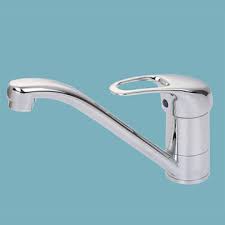
  • A tap with a single twist and large handle: These taps are easier to use than the turn taps, and can be operated even by people with poor hand strength and/or coordination

The steps mentioned here are just a few simple inexpensive methods to make your clinic more accessible. We at DCSN recognize that accessibility is a complex problem that requires improvement not only on our part but also in the way our society views the needs of differently abled individuals. However the steps mentioned above can greatly help a person without any real increase in cost to either the dentist or the patient. I would be wise to remember that more than an open door, access requires an open mind.