Showing posts with label Preventive Dentistry. Show all posts

Tuesday, December 2, 2008

Autism - The disease and Implications for Dental Care


Dr Sharat Chandra Pani

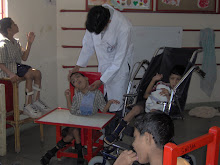
Autism is a severe developmental disorder that affects the way a child sees and interacts with the rest of the world. It limits their ability to interact with others socially, in fact many autism suffers avoid human contact. Autism is part of a larger group of disorders called pervasive developmental disorders (PDD).

In 1911 a  Swiss psychiatrist Eugene Bleuler, coined the term Autism to describe pepole who had a difficulty in communication, he however was referring to adult schizophrenia. The term as we know it today is attributed to Leo Kanner, an American Psychiatrist, who in 1943 coined the term while studying children at Johns Hopkins University. He based his discovery on findings from 11 children he observed between 1938 and 1943. What he studied were children who had withdrawal from human contact as early as age one.Until the 1960’s Autism was thought to be a form of schizophrenia, a misdiagnosis that led many parents to blame themselves for the problem.  It has only been in the last few decades that the medical fraternity has truly  begun to understand Autism; so it is not surprising that a great deal of confusion exists, even among the medical fraternity about the diagnosis, treatment and dental management of children with autism.

In this series of Posts DCSN looks at Autism, it's causes, probable management strategies and useful tips for the parent who is anxious about taking the child to the dentist for the first time; and also the dentist who is probably equally anxious about treating a child with autism.

 Posts for parents

 Posts for Dentists

Diagnosing Autism  

What causes Autism?  

Is a child with Autism always mentally retarded?  

Preparing your Child for a vist to the Dentist 

Preparing yourself to treat an autistic child 

Autism in India - the challenges of misdiagnosis  

Autism in India - Support Centers in India

Monday, November 3, 2008

Keep that drill at bay- A cream to reverse dental caries


The dentist's drill is perhaps one of the scariest parts of a dental visit. Add to this the aversion to noise of an autistic child or the startle reflex of a child with cerebral palsy and you get a situation that is unpleasant for dentist, child and parent alike. A high speed drill also requires the child to stay still during the procedure to prevent the dentist from accidentally nicking the tongue or cheek. All in all the drilling of a cavity is a task that is best kept at bay.Prevention is better than cure, but traditionally dentists  have viewed prevention as the steps taken to prevent dental decay such as brushing, flossing and in some cases even topical fluorides. Once dental decay sets in, however,the age old adage of "Drill-Fill-Bill" is the chosen response of the dentist. But things are changing - for the better.
CPP-ACP the remineralization cream
Casein-Phospho-Peptide Amorphous-Calcium-Phosphate; or CPP-ACP for short is a topically applied agent that helps restore calcium lost due to bacterial acids back into your child's teeth.The role of calcium in the prevention of dental disease is perhaps the most misrepresented of all dental facts. Toothpaste ads constantly show a dentist (or someone pretending to be one) telling you how calcium will make your child's tooth "strong" and prevent caries, when the actual role of calcium in toothpastes is to act as an abrasive that cleans your tooth! 
How Does it Work?
In the 1990's researchers began to notice that certain types of cheese, such as cheddar, actually helped to reduce caries. Further research showed that Casein - the milk protein that cheese is rich in binds to dental plaque - the film of deposits on your teeth and helps restore calcium that has been depleted due to acids produced by bacteria. The calcium in the teeth is in the form of calcium phosphate. A team of Australian dentists led by Prof EC Reynolds at the University of Melbourne found that a creme combining Casein with amorphous calcium phosphate not only attached to the tooth but also provided the calcium ions for the tooth. Thus CPP-ACP was born and the first commercial paste Recaldent was launched.


The Casein forms a layer on the surface of the tooth while the Calcium and phosphate ions of the creme enter the tooth. The complex also attracts more calcium and phosphate ions from the saliva


How to use it

Ever since the early success of recaldent, CPP-ACP has found itself in chewing gums, creams and toothpastes. In India currently only the cream is marketed. The cream can either be loaded onto a tray supplied by the manufacturer and applied to all the teeth or a small amount can be taken on a clean finger and applied to the affected tooth. Since the best action of the cream is when it is placed for prolonged periods of time the best time to apply it would be after the night time brush. 

Contraindications

Since the cream is made up of milk protein it is contraindicated in people who have hereditary protein intolerance. The cream does not contain fluoride and if you are worried about fluoride ingestion, especially by children with CP who cannot control their swallow, then CPP-ACP provides a safe alternative.

Listed below are a series of links featuring products that contain CPP-ACP and the countries in which they are available.

Recaldent Gums (Japan)

http://www.breezecare.co.uk/ukcard/recaldent.html

Trident Xtra Care Gums (US)
http://www.tridentgum.com/#/products/xtracare/coolmint

GC Tooth Mousse (Asia, Europe, through dentists)
http://www.gceurope.com/en/products/detail.php

GC MI Paste & GC MI Paste Plus
http://www.mi-paste.com/
http://www.gcamerica.com/

Liked this post and would like more scientific research on CPP-ACP? click here

CPP-ACP Detailed Information for Dentists


The CPP-ACP peptide nanocomplex isolated from milk protein.

The CPP-ACP (casein phosphopeptide-amorphous calcium phosphate) nanocomplex is found in the casein protein of cows milk. These peptides are responsible for carrying the calcium phosphate in milk and are what give milk its white colour. 

The onset of caries (dental decay) commences when bacteria in plaque produce an organic acid that dissolves tooth enamel by breaking down the calcium and phosphate in the enamel. The CPP-ACP complex delivers calcium and phosphate ions into the tooth, repairing and strengthening areas of enamel previously damaged by the action of plaque bacteria – remineralising the enamel.


A vast amount of literatutre is available on the action of CPP-ACP. We have selected for you the best and most easily accessible articles. Many are free while others are available though common portals such as Ovid or Karger. We hope you will benefit from the links below.

Selected presentations:

Reynolds EC. CPP-ACP - The Evidence (pdf) (1720kb)

Selected journal articles: 

Cai F, Manton DJ, Shen P, Walker GD, Cross KJ, Yuan Y, Reynolds C. Effect of addition of citric acid and casein phosphopeptide-amorphous calcium phosphate to a sugar-free chewing gum on enamel remineralization in situ. Caries Research41:377-383 (2007). full text through ovid

Cochrane NJ, Saranathan S, Cai F, Cross KJ, Reynolds EC. Enamel subsurface lesion remineralisation with casein phosphopeptide stablised solutions of calcium, phosphate and fluoride. Caries Research 42:88-97 (2008). 

Free abstract. Full text through caries research

Morgan MV, Adams GG, Bailey DL, Tsao CE, Fischman SL, Reynolds EC. The anticariogenic effect of sugar-free gum containing CPP-ACP nanocomplexes on approximal caries determined using digital bitewing radiography. Caries Research 42:171-184 Free abstract. Full text through ovid 


Reynolds EC. The prevention of sub-surface demineralization of bovine enamel and change in plaque composition by casein in an intra-oral model. J Dent Res 66: 1120-1127 (1987). 
Free abstract. Full text through Journal of Dental Research

Reynolds EC. Remineralization of enamel subsurface lesions by casein phosphopeptide-stabilized calcium phosphate solutions. J Dent Res 76:1587-1595 (1997). 

Free abstract. Full text through Journal of Dental Research

Reynolds EC, Cai F. Shen P, Walker GD. Retention in plaque and remineralization of enamel lesions by various forms of calcium in a mouthrinse or sugar-free chewing gum. J Dent Res 82:206-211 (2003). 

Free abstract. Full text through Journal of Dental Research

Reynolds EC, Walsh L. ‘Additional aids to remineralisation of tooth structure’. In:Preservation and Restoration of Tooth Structure. Ed. Mount G and Hume W, Brisbane: Knowledge Books and Software, pp 109-116 (2005). 
Free abstract. Full text through Journal of Dental Research
Shen P, Cai F, Nowicki A, Vincent J, Reynolds EC. Remineralization of enamel subsurface lesions by sugar-free chewing gum containing casein phosphopeptide-amorphous calcium phosphate. J Dent Res 80: 2066-2070 (2001).Free abstract. Full text through Journal of Dental Research


Cochrane N J, Saranthan, S, Cai F, Cross K J, Reynolds EC. Enamel subsurface lesion remineralisation with casein phosphopeptide stabilized solutions of calcium, phosphate and fluoride. Caries Research, 42:88-97 (2008). 
Free abstract. Full text through caries research


Reynolds E C, Cai F, Cochrane N, Shen P, Walker GD, Morgan MV, Reynolds C. Fluoride and Casein Phosphopeptide-Amorphous Calcium Phosphate. Journal of Dental Research,  87(4):344-348, 2008.

Free abstract. Full text through Journal of Dental Research